//
//
Technical Insight
Technical Insight
//
//
The Frame Is Not an Afterthought
The Frame Is Not an Afterthought
Bespoke framing is not a finishing touch. It is a defining decision that shapes how an artwork is seen, felt, and valued.
Bespoke framing is not a finishing touch. It is a defining decision that shapes how an artwork is seen, felt, and valued.
by
Arteum
3
min read
There is a tendency, even among people who care deeply about art, to treat the frame as a finishing touch. Something chosen at the end, once the real decisions have been made. We understand where that instinct comes from, but in our experience, it is the instinct most likely to undermine an otherwise excellent project.
The frame is not decoration. It is a structural, visual, and material decision that directly affects how a work is experienced. Get it right, and it disappears into the work. Get it wrong, and it is all you see.
It starts with the artwork
Every framing decision we make begins with the work itself. The image, the medium, the scale, the surface - all of it informs what the frame should and should not do. A deep-set solid oak frame, hand-waxed to a natural finish, does something entirely different to a work (and its environment!) than a slim aluminium profile or a painted box frame. Neither is inherently correct, and context is everything.
This is why we never offer a standard menu of options and ask clients to choose. We look at the work first. Then we talk about the frame.
Material is meaning
The materials used in a frame carry weight, literally and visually. Solid woods bring warmth, grain, and a tactile quality that resonates with certain works and certain interiors. Aluminium profiles offer precision, restraint, and a contemporary clarity. Gold leaf, applied by hand, introduces a richness and depth that no spray finish can replicate.
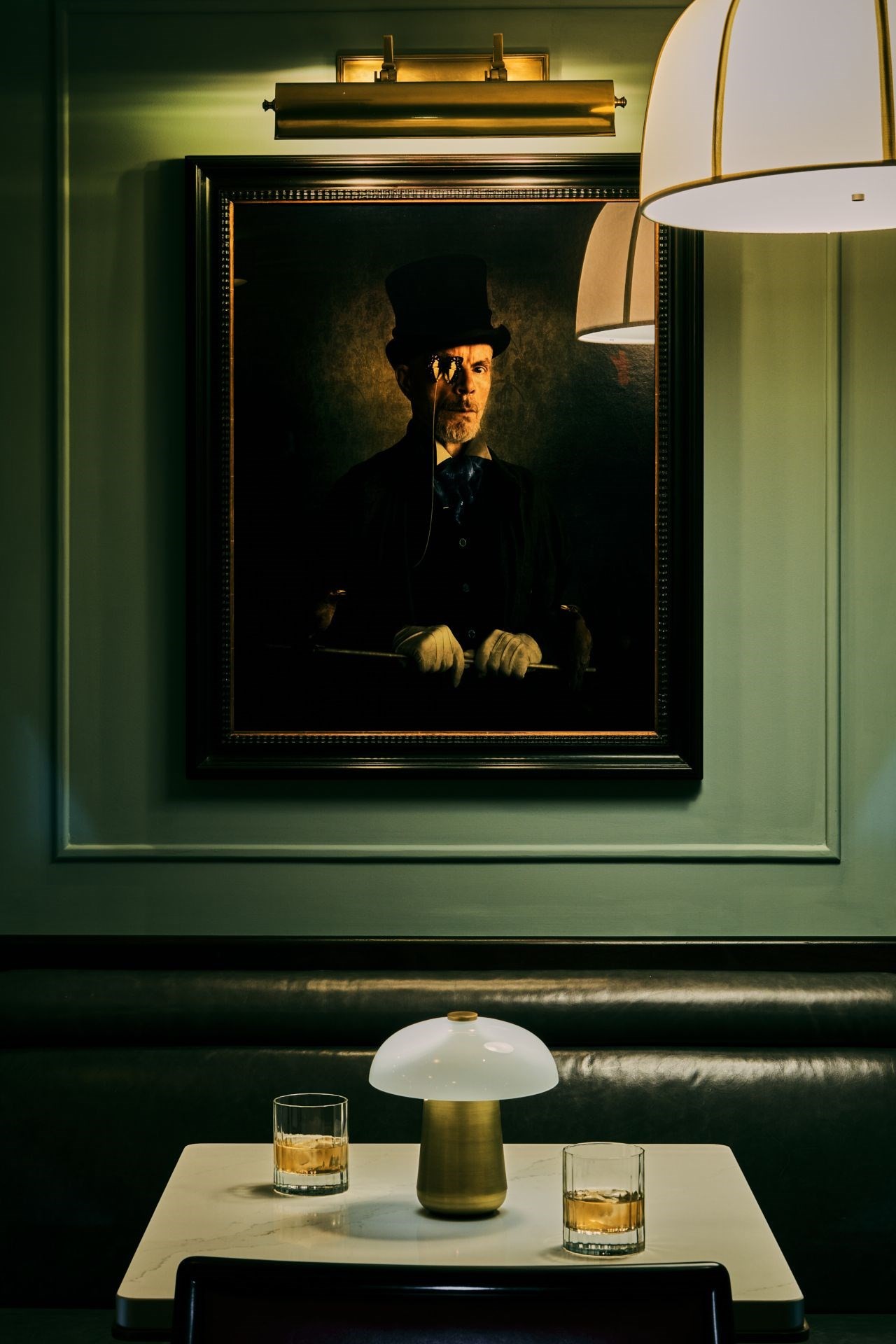
At Arteum, we work across all of these. We also develop bespoke mouldings where a project demands something that does not exist off the shelf, as we did for The Mayfair Townhouse, where a custom gold leaf finish was developed and manufactured at our Portugal facility to match an exact tone specified by the design team. That level of specificity is standard for Arteum, and that is why clients come to see us.
Scale changes everything
Framing a single work for a collector is one thing. Framing 900 works across a full hotel refurbishment is another challenge entirely. We have done both, often in the same month.
At scale, the frame becomes a design element in its own right. Proportion, reveal depth, glass specification, and finish all need to hold together across hundreds of pieces and multiple environments. A detail that reads well in isolation can feel wrong repeated across a corridor of forty rooms. This is where production knowledge and design sensibility have to work together, and where experience makes a genuine difference.
Conservation is part of the conversation
For original works and limited editions, framing is not simply an aesthetic decision, but a preservation one. The materials used, the glazing specified, the space created between the work and the glass; all of it affects the long-term condition of the piece. We apply conservation-led approaches using museum-grade, acid-free materials wherever the work calls for it, because a frame that damages what it is meant to protect has failed at the most fundamental level.
The frame completes the work
When framing is done well, nobody comments on it. The work simply looks right: considered, resolved, and entirely at home in its environment. That invisibility is the goal, and it takes considerable care and craft to achieve it.
The frame is never an afterthought at Arteum. It is where the work is finished.
There is a tendency, even among people who care deeply about art, to treat the frame as a finishing touch. Something chosen at the end, once the real decisions have been made. We understand where that instinct comes from, but in our experience, it is the instinct most likely to undermine an otherwise excellent project.
The frame is not decoration. It is a structural, visual, and material decision that directly affects how a work is experienced. Get it right, and it disappears into the work. Get it wrong, and it is all you see.
It starts with the artwork
Every framing decision we make begins with the work itself. The image, the medium, the scale, the surface - all of it informs what the frame should and should not do. A deep-set solid oak frame, hand-waxed to a natural finish, does something entirely different to a work (and its environment!) than a slim aluminium profile or a painted box frame. Neither is inherently correct, and context is everything.
This is why we never offer a standard menu of options and ask clients to choose. We look at the work first. Then we talk about the frame.
Material is meaning
The materials used in a frame carry weight, literally and visually. Solid woods bring warmth, grain, and a tactile quality that resonates with certain works and certain interiors. Aluminium profiles offer precision, restraint, and a contemporary clarity. Gold leaf, applied by hand, introduces a richness and depth that no spray finish can replicate.
At Arteum, we work across all of these. We also develop bespoke mouldings where a project demands something that does not exist off the shelf, as we did for The Mayfair Townhouse, where a custom gold leaf finish was developed and manufactured at our Portugal facility to match an exact tone specified by the design team. That level of specificity is standard for Arteum, and that is why clients come to see us.
Scale changes everything
Framing a single work for a collector is one thing. Framing 900 works across a full hotel refurbishment is another challenge entirely. We have done both, often in the same month.
At scale, the frame becomes a design element in its own right. Proportion, reveal depth, glass specification, and finish all need to hold together across hundreds of pieces and multiple environments. A detail that reads well in isolation can feel wrong repeated across a corridor of forty rooms. This is where production knowledge and design sensibility have to work together, and where experience makes a genuine difference.
Conservation is part of the conversation
For original works and limited editions, framing is not simply an aesthetic decision, but a preservation one. The materials used, the glazing specified, the space created between the work and the glass; all of it affects the long-term condition of the piece. We apply conservation-led approaches using museum-grade, acid-free materials wherever the work calls for it, because a frame that damages what it is meant to protect has failed at the most fundamental level.
The frame completes the work
When framing is done well, nobody comments on it. The work simply looks right: considered, resolved, and entirely at home in its environment. That invisibility is the goal, and it takes considerable care and craft to achieve it.
The frame is never an afterthought at Arteum. It is where the work is finished.
MORE TO READ
//
Technical Insight
//
The Frame Is Not an Afterthought
Bespoke framing is not a finishing touch. It is a defining decision that shapes how an artwork is seen, felt, and valued.
by
Arteum
3
min read
There is a tendency, even among people who care deeply about art, to treat the frame as a finishing touch. Something chosen at the end, once the real decisions have been made. We understand where that instinct comes from, but in our experience, it is the instinct most likely to undermine an otherwise excellent project.
The frame is not decoration. It is a structural, visual, and material decision that directly affects how a work is experienced. Get it right, and it disappears into the work. Get it wrong, and it is all you see.
It starts with the artwork
Every framing decision we make begins with the work itself. The image, the medium, the scale, the surface - all of it informs what the frame should and should not do. A deep-set solid oak frame, hand-waxed to a natural finish, does something entirely different to a work (and its environment!) than a slim aluminium profile or a painted box frame. Neither is inherently correct, and context is everything.
This is why we never offer a standard menu of options and ask clients to choose. We look at the work first. Then we talk about the frame.
Material is meaning
The materials used in a frame carry weight, literally and visually. Solid woods bring warmth, grain, and a tactile quality that resonates with certain works and certain interiors. Aluminium profiles offer precision, restraint, and a contemporary clarity. Gold leaf, applied by hand, introduces a richness and depth that no spray finish can replicate.
At Arteum, we work across all of these. We also develop bespoke mouldings where a project demands something that does not exist off the shelf, as we did for The Mayfair Townhouse, where a custom gold leaf finish was developed and manufactured at our Portugal facility to match an exact tone specified by the design team. That level of specificity is standard for Arteum, and that is why clients come to see us.
Scale changes everything
Framing a single work for a collector is one thing. Framing 900 works across a full hotel refurbishment is another challenge entirely. We have done both, often in the same month.
At scale, the frame becomes a design element in its own right. Proportion, reveal depth, glass specification, and finish all need to hold together across hundreds of pieces and multiple environments. A detail that reads well in isolation can feel wrong repeated across a corridor of forty rooms. This is where production knowledge and design sensibility have to work together, and where experience makes a genuine difference.
Conservation is part of the conversation
For original works and limited editions, framing is not simply an aesthetic decision, but a preservation one. The materials used, the glazing specified, the space created between the work and the glass; all of it affects the long-term condition of the piece. We apply conservation-led approaches using museum-grade, acid-free materials wherever the work calls for it, because a frame that damages what it is meant to protect has failed at the most fundamental level.
The frame completes the work
When framing is done well, nobody comments on it. The work simply looks right: considered, resolved, and entirely at home in its environment. That invisibility is the goal, and it takes considerable care and craft to achieve it.
The frame is never an afterthought at Arteum. It is where the work is finished.