//
//
Work
Work
//
//
Artisanal Craftsmanship
Artisanal Craftsmanship
What we do requires something that cannot be automated. Judgement. Experience. The kind of knowledge that comes from years of working with materials.
What we do requires something that cannot be automated. Judgement. Experience. The kind of knowledge that comes from years of working with materials.
by
Arteum
3
min read
There is a version of fine art production that is entirely mechanical. Files processed, prints output, frames ordered from a supplier, works dispatched. It is efficient, and it is not what we do.
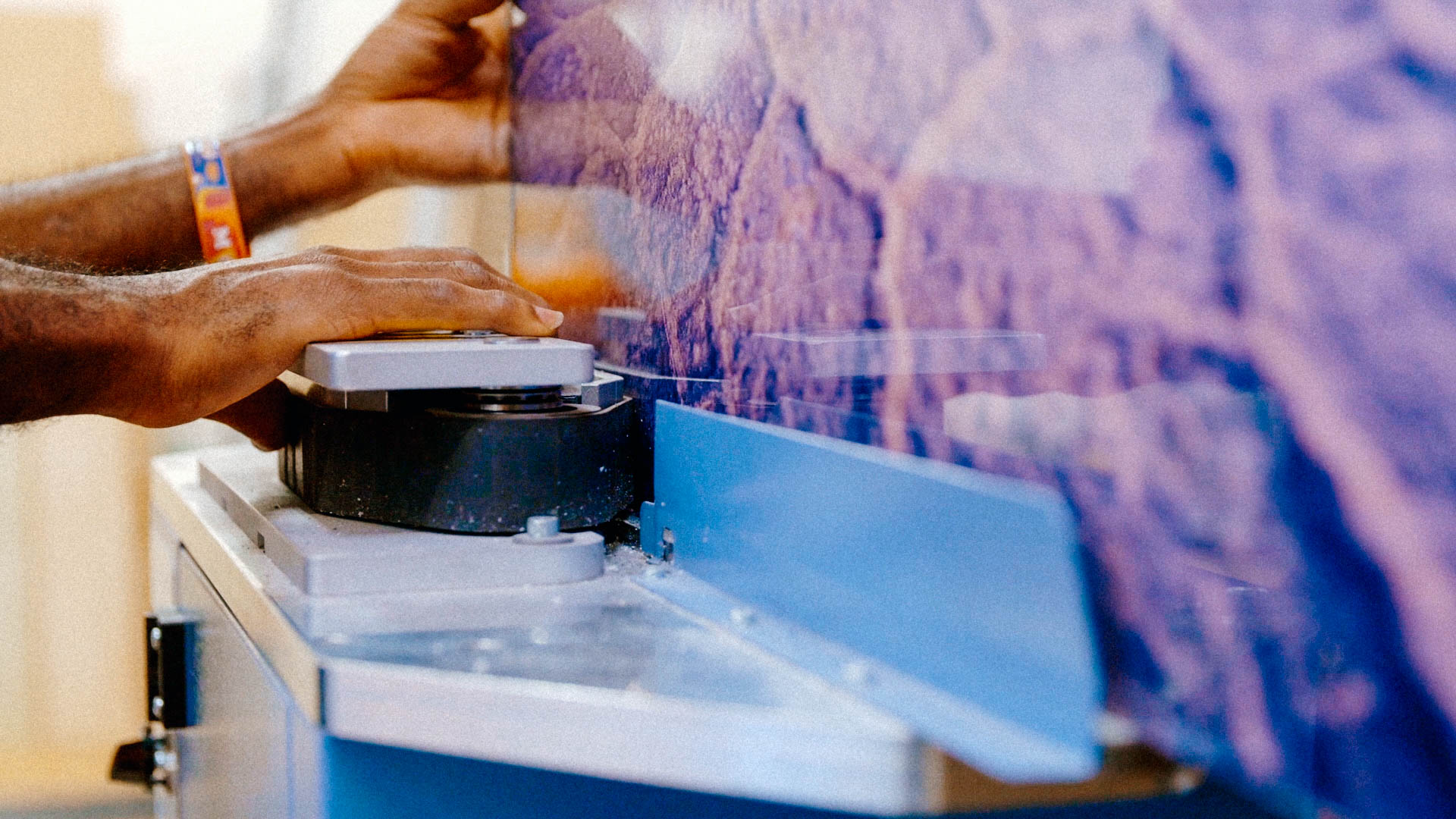
What we do requires something that cannot be automated. Judgement. Experience. The kind of knowledge that comes from years of working with materials, understanding how they behave, and knowing when something is right and when it is not quite there yet.
That is what craftsmanship means to us. It is not a marketing position, but an actual way of working.
The hand in the work
Look closely at a frame that has been hand-stained and waxed, and you will see something that a sprayed or machine-finished frame simply does not have: a depth to the surface, or a variation in the grain that catches light differently depending on where you stand. It does take longer to produce, but it looks better, and it lasts.
Gold leaf applied by hand has the same quality. The slight irregularity of the surface, or the way it holds warmth rather than reflecting it flatly. You can truly sense that someone made a considered decision about every centimetre of it. And these are the result of skill applied with patience, and a love for the craft.
At Arteum, hand finishing is not reserved for the most expensive projects. It is part of how we work across everything we make, because the “close enough” alternative is simply not something we are comfortable with.
Material knowledge
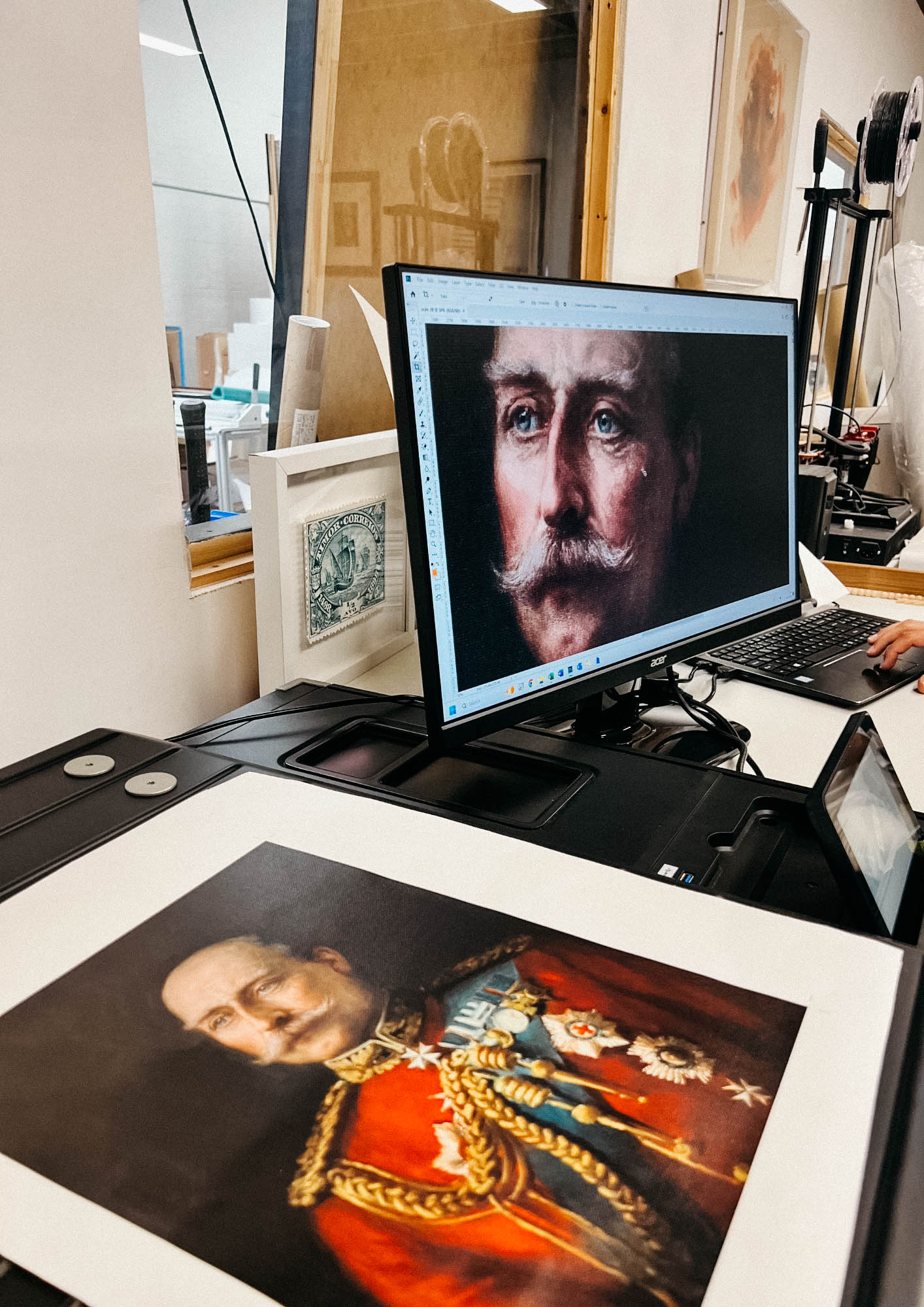
Craftsmanship begins with understanding materials. Knowing which timber will hold a stain consistently and which will not. Knowing how different paper surfaces interact with archival inks, and what that means for the final image. Or knowing how acrylic behaves at scale, how canvas responds to changes in humidity, or how a conservation mount needs to be constructed to protect a work over decades rather than years.
This is knowledge we’ve accumulated through years of production, through problems we’ve encountered and resolved, and through the ongoing process of testing, refining, and improving. It is the foundation on which every decision we make is built.
When bespoke is the only answer
There are projects where no existing solution is right, and the only option is to make something that does not yet exist. These are the projects we find most interesting, because they require everything we know to be brought to bear at once. The technical, the aesthetic, and the practical, working together toward a result that could not have been achieved any other way.
Why it matters
In an industry where speed and volume are constant pressures, the commitment to making things properly is a choice. It takes longer, it requires more from the people doing it, and it is harder to maintain at scale.
But the work shows it. And the people who commission it notice.
There is a version of fine art production that is entirely mechanical. Files processed, prints output, frames ordered from a supplier, works dispatched. It is efficient, and it is not what we do.
What we do requires something that cannot be automated. Judgement. Experience. The kind of knowledge that comes from years of working with materials, understanding how they behave, and knowing when something is right and when it is not quite there yet.
That is what craftsmanship means to us. It is not a marketing position, but an actual way of working.
The hand in the work
Look closely at a frame that has been hand-stained and waxed, and you will see something that a sprayed or machine-finished frame simply does not have: a depth to the surface, or a variation in the grain that catches light differently depending on where you stand. It does take longer to produce, but it looks better, and it lasts.
Gold leaf applied by hand has the same quality. The slight irregularity of the surface, or the way it holds warmth rather than reflecting it flatly. You can truly sense that someone made a considered decision about every centimetre of it. And these are the result of skill applied with patience, and a love for the craft.
At Arteum, hand finishing is not reserved for the most expensive projects. It is part of how we work across everything we make, because the “close enough” alternative is simply not something we are comfortable with.
Material knowledge
Craftsmanship begins with understanding materials. Knowing which timber will hold a stain consistently and which will not. Knowing how different paper surfaces interact with archival inks, and what that means for the final image. Or knowing how acrylic behaves at scale, how canvas responds to changes in humidity, or how a conservation mount needs to be constructed to protect a work over decades rather than years.
This is knowledge we’ve accumulated through years of production, through problems we’ve encountered and resolved, and through the ongoing process of testing, refining, and improving. It is the foundation on which every decision we make is built.
When bespoke is the only answer
There are projects where no existing solution is right, and the only option is to make something that does not yet exist. These are the projects we find most interesting, because they require everything we know to be brought to bear at once. The technical, the aesthetic, and the practical, working together toward a result that could not have been achieved any other way.
Why it matters
In an industry where speed and volume are constant pressures, the commitment to making things properly is a choice. It takes longer, it requires more from the people doing it, and it is harder to maintain at scale.
But the work shows it. And the people who commission it notice.
MORE TO READ

//
Work
//
Artisanal Craftsmanship
What we do requires something that cannot be automated. Judgement. Experience. The kind of knowledge that comes from years of working with materials.
by
Arteum
3
min read
There is a version of fine art production that is entirely mechanical. Files processed, prints output, frames ordered from a supplier, works dispatched. It is efficient, and it is not what we do.
What we do requires something that cannot be automated. Judgement. Experience. The kind of knowledge that comes from years of working with materials, understanding how they behave, and knowing when something is right and when it is not quite there yet.
That is what craftsmanship means to us. It is not a marketing position, but an actual way of working.
The hand in the work
Look closely at a frame that has been hand-stained and waxed, and you will see something that a sprayed or machine-finished frame simply does not have: a depth to the surface, or a variation in the grain that catches light differently depending on where you stand. It does take longer to produce, but it looks better, and it lasts.
Gold leaf applied by hand has the same quality. The slight irregularity of the surface, or the way it holds warmth rather than reflecting it flatly. You can truly sense that someone made a considered decision about every centimetre of it. And these are the result of skill applied with patience, and a love for the craft.
At Arteum, hand finishing is not reserved for the most expensive projects. It is part of how we work across everything we make, because the “close enough” alternative is simply not something we are comfortable with.
Material knowledge
Craftsmanship begins with understanding materials. Knowing which timber will hold a stain consistently and which will not. Knowing how different paper surfaces interact with archival inks, and what that means for the final image. Or knowing how acrylic behaves at scale, how canvas responds to changes in humidity, or how a conservation mount needs to be constructed to protect a work over decades rather than years.
This is knowledge we’ve accumulated through years of production, through problems we’ve encountered and resolved, and through the ongoing process of testing, refining, and improving. It is the foundation on which every decision we make is built.
When bespoke is the only answer
There are projects where no existing solution is right, and the only option is to make something that does not yet exist. These are the projects we find most interesting, because they require everything we know to be brought to bear at once. The technical, the aesthetic, and the practical, working together toward a result that could not have been achieved any other way.
Why it matters
In an industry where speed and volume are constant pressures, the commitment to making things properly is a choice. It takes longer, it requires more from the people doing it, and it is harder to maintain at scale.
But the work shows it. And the people who commission it notice.